

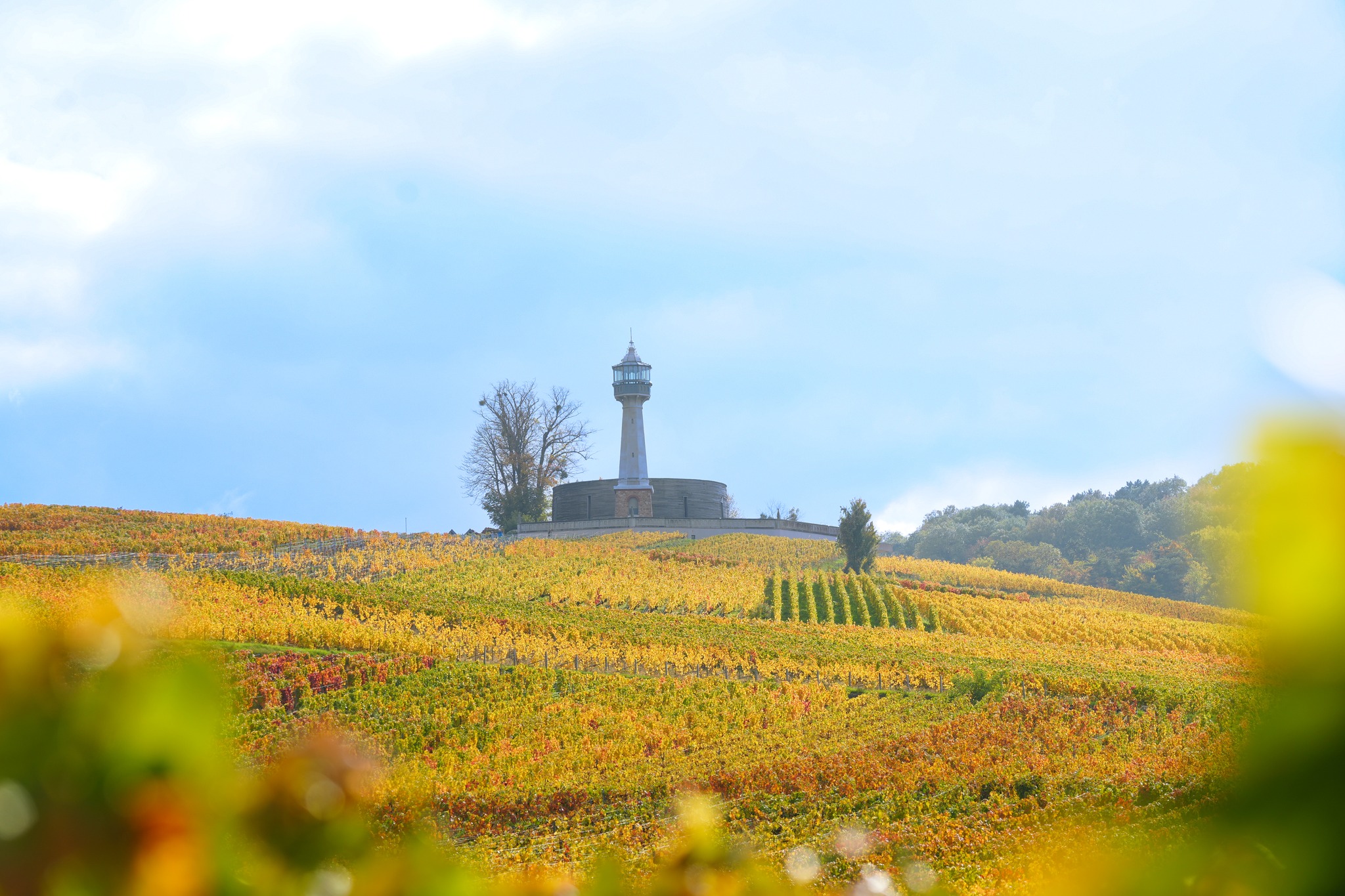
Montagne de Reims: things to do
A one-of-a-kind forest, Grand Cru wine villages, sweeping viewpoints and great addresses: the complete guide to a getaway right next to Reims.
Just twenty minutes from Reims, the landscape shifts in an instant. The chalky plain gives way, the road climbs between rows of vines, and the forest closes in around you: welcome to the Montagne de Reims. This wooded massif sitting between Reims and Épernay is far more than a postcard backdrop — it is a fully fledged regional nature park (a parc naturel régional), a green lung where forest, Grand Cru slopes and wine-growing villages answer one another at every bend.
So what is there to do in the Montagne de Reims? People come for very different reasons, and that is exactly its richness. To walk among the Faux de Verzy, the twisted beech trees you will not find anywhere else on earth. To climb to the top of the Verzenay lighthouse and take in the sea of vines. To step into a grower's cellar, have lunch on a terrace facing the slopes, or simply string together viewpoints from one village to the next.
In this guide I take you village by village, with the must-see sites, the best places to eat and have a glass, and every way to get there from Reims — including without a car, which few visitors realise is possible.
- The Faux de Verzy — the forest of twisted trees, unique in the world
- The Verzenay lighthouse — the 360° belvedere over the vineyards
- The Mont Sinaï observatory — the highest point of the park
- The Saint-Lié chapel — the finest panorama over Reims
The Montagne de Reims at a glance
Created in 1976, the Montagne de Reims Regional Nature Park covers some 520 km² and brings together 61 villages and towns, between Reims to the north and Épernay to the south. Its identity rests on a trio of landscapes: a vast forested plateau, the vine-covered slopes that ring it, and the farmland valleys below.
It is this relief that makes the place so special. The exposed slopes carry an exceptional vineyard — several villages here are classified Grand Cru, the top tier of Champagne's ranking — while the plateau forest shelters the world's largest concentration of "faux", those beeches with their tortured shapes. To explore it all, the park is criss-crossed by more than 500 km of waymarked walking trails — plus 90 km of mountain-bike routes — open to walkers, cyclists and riders.
In practice, you can see the essentials in a full day, or settle for a focused half-day (the Faux plus one village, say). Reims is so close that the trip is easy — more on that at the end of the guide, with all the transport options.
What to see and do, village by village
For each stop I also point you to a place to have lunch or a glass.
VerzyThe Faux de Verzy and the Mont Sinaï
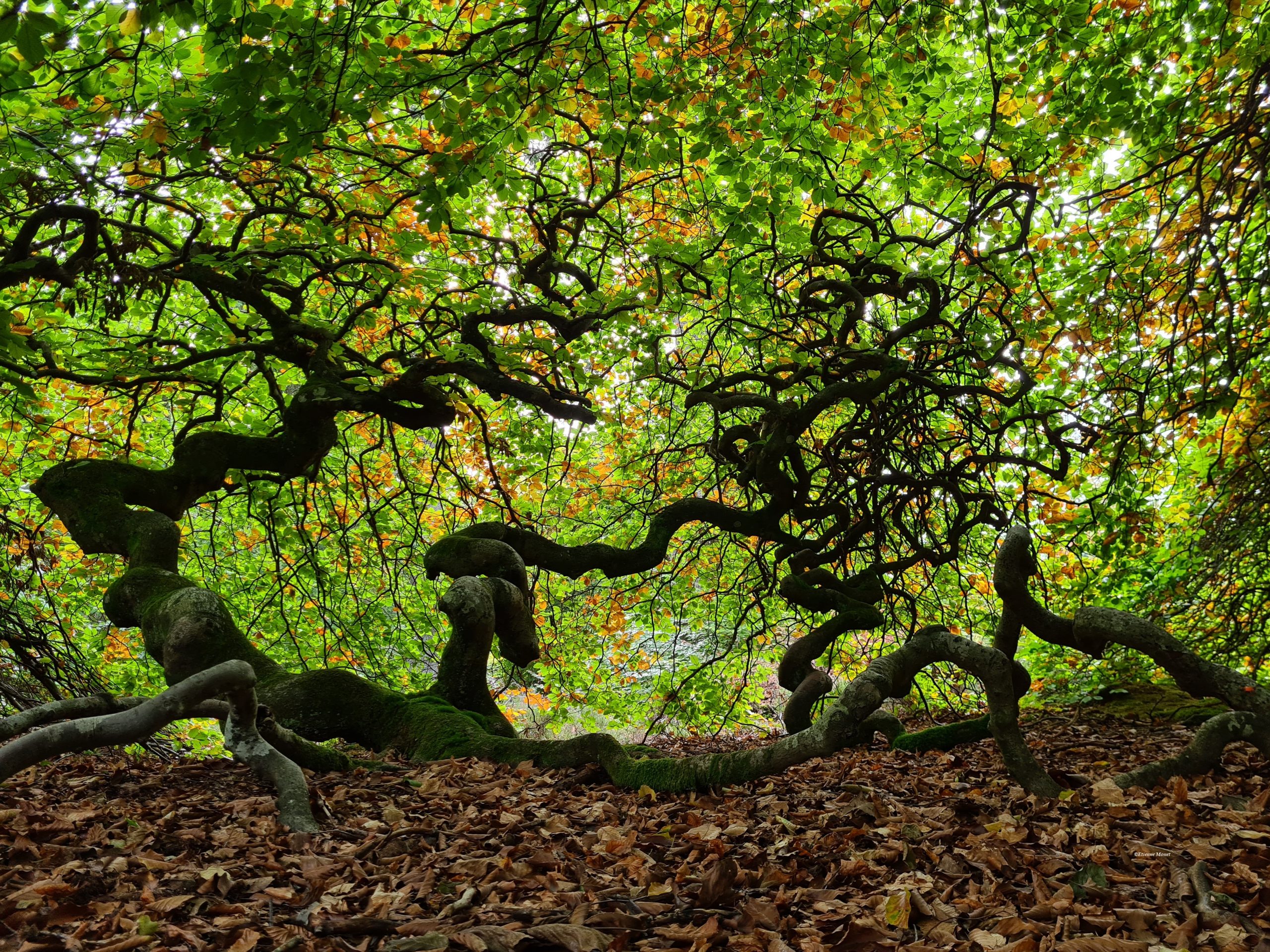
If you had to pick a single site in the whole Montagne de Reims, this would be it. Above the village of Verzy — a Grand Cru and the final stop of the Grand'R shuttle — the state forest is home to the famous Faux de Verzy, twisted beeches (Fagus sylvatica var. tortuosa) with knotted trunks and branches drooping like parasols. They rarely top five metres, can live nearly 350 years, and their origin — a natural genetic mutation — remains a mystery to science to this day. Legend has it that the monks of the nearby Saint-Basle abbey protected them for centuries. With close to 800 specimens, this is the largest concentration in the world: a site protected since 1932, part of it set aside as a 30-hectare biological reserve, and the Verzy forest carries the Forêt d'Exception® label, like those of Hautvillers and the Chêne à la Vierge. One last curiosity: a fau can stop twisting, revert to an ordinary beech, then start twisting again.
To discover them, a waymarked trail of about 3 km winds through the woods. It is an easy, flat walk suitable for everyone and takes barely more than an hour. Some of the trees even have names — the umbrella fau, the bride's fau, the ox-head — and you pass the spot of the famous fau de la Demoiselle, where Joan of Arc is said to have rested; struck by lightning in 2017, the tree was left in place by the forestry service (ONF) with a panel telling its story. A tip: download the free "ONF Découvertes" app before you set off, as the signal is poor under the trees. The site is signposted from the D944 (Reims–Châlons); park at the Faux or Pins car parks, both very busy at weekends — come early. For a sportier loop combining vines and forest, the PR®63 "Entre Vignes et Faux" trail (about 10 km, 3 hrs) links the two landscapes.
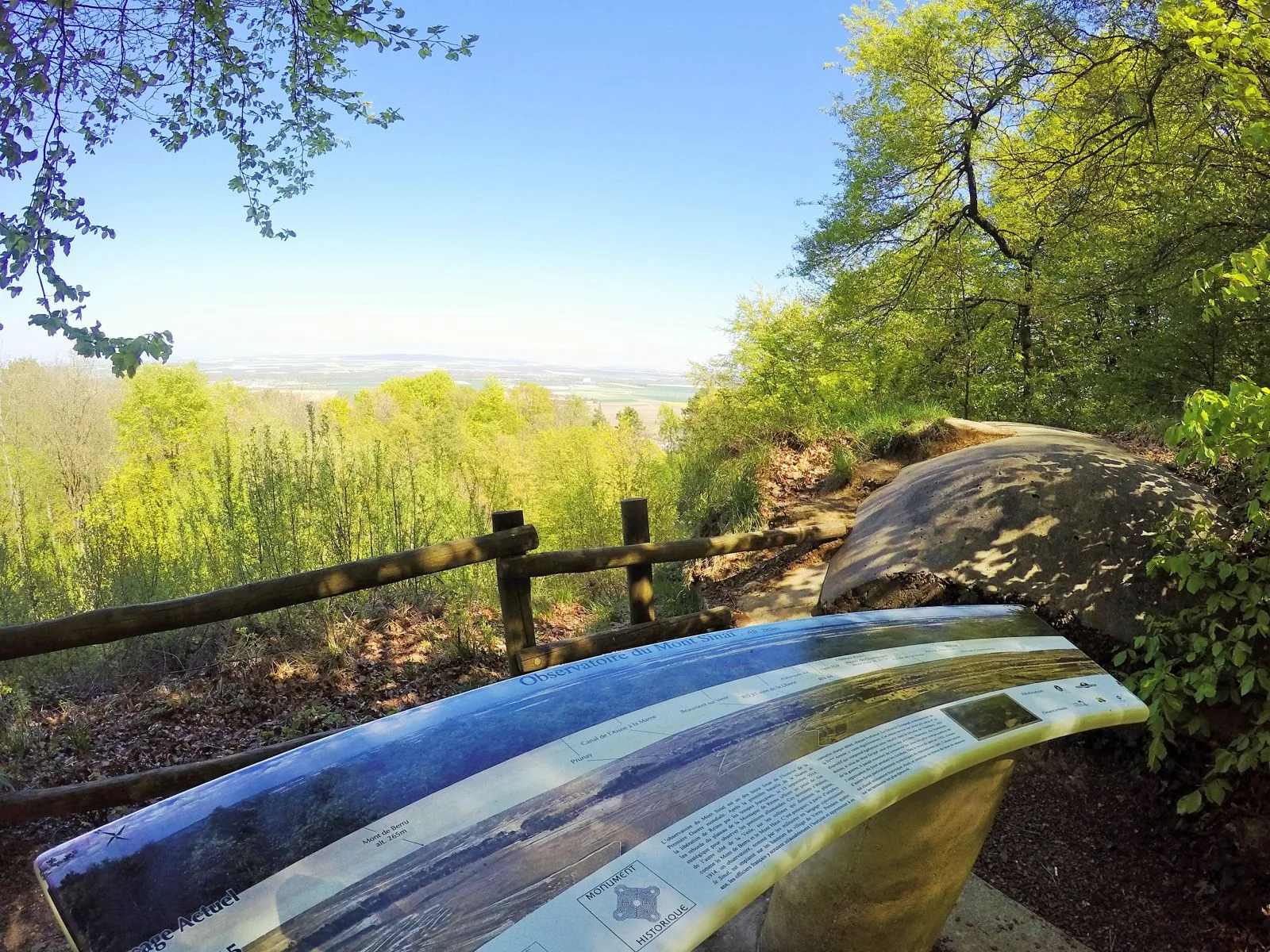
A short walk away stands the Mont Sinaï observatory, the highest point of the park — and of the whole Marne département — at some 288 metres. From the orientation table the view takes in the Reims plain and the slopes; the concrete shelter here, protected since 1922, is a reminder that this promontory served as a military observation post — an echo of the Saint-Lié chapel at the other end of the massif.
Perching Bar — an unusual experience: a Champagne bar perched several metres up in the trees, on the edge of the Verzy forest. You sip a glass in the canopy, in a designer cabin setting (open in season; check the hours).
VerzenayThe Lighthouse and the Windmill
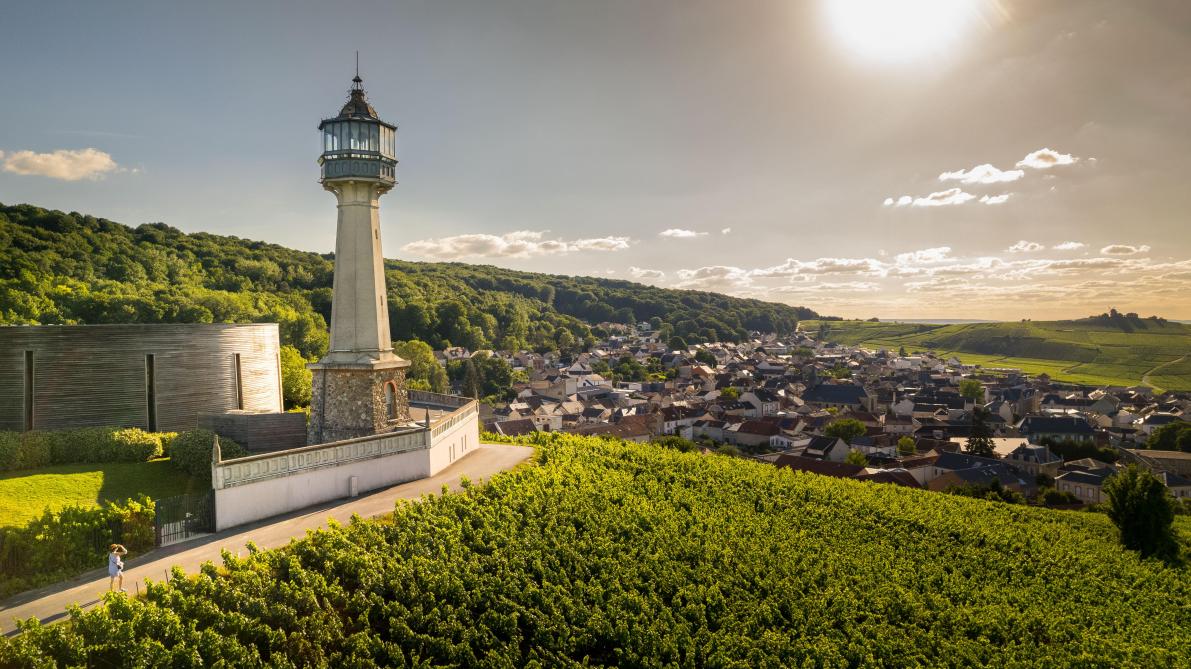
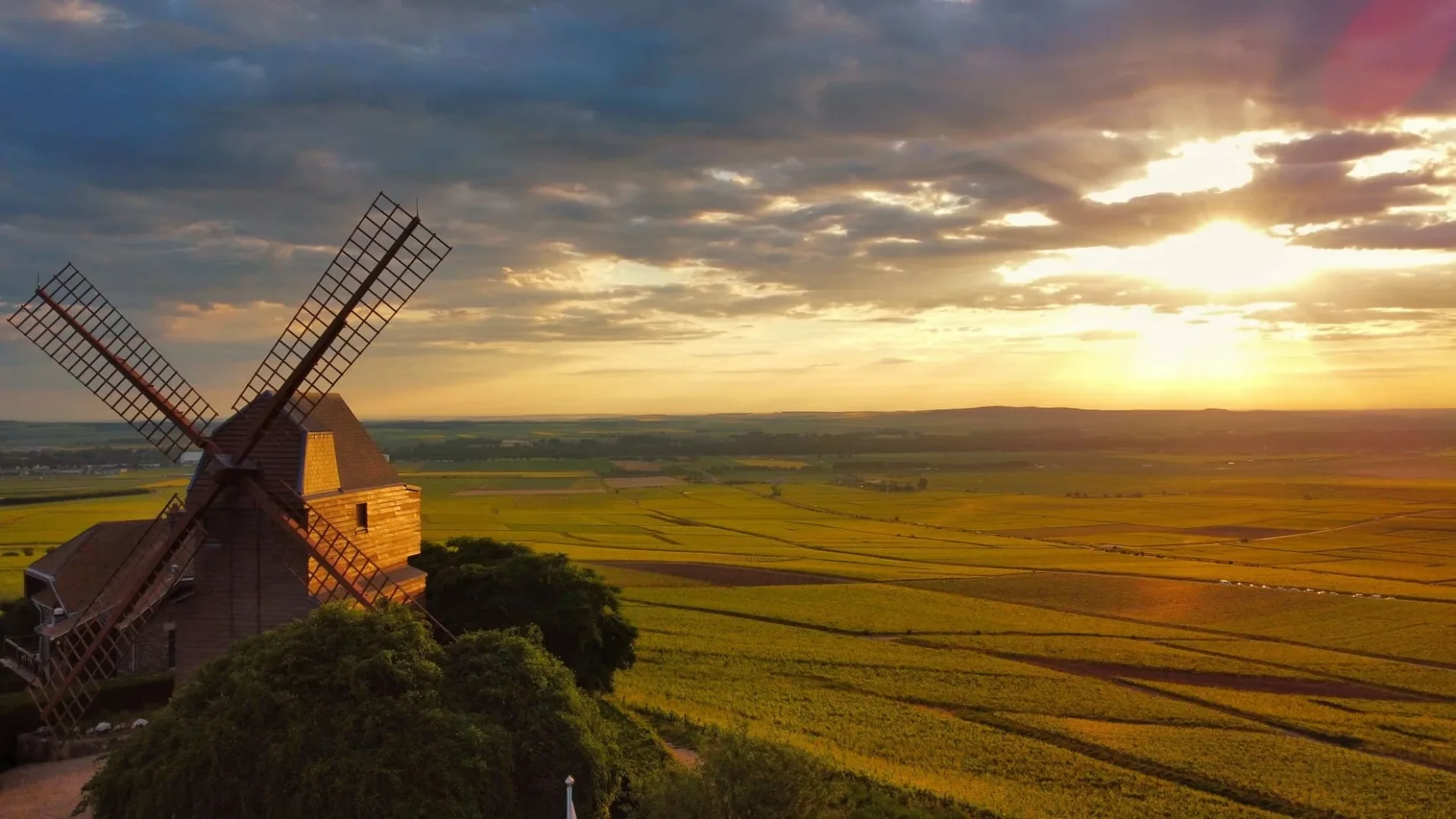
A Grand Cru village set on the slopes, Verzenay is guarded by two silhouettes that everyone photographs. The first is the Verzenay lighthouse: a genuine lighthouse built in 1909, originally as a publicity stunt for the Joseph Goulet Champagne house. You climb its 101 steps to the belvedere, where a 360° panorama opens over the ocean of vines, the Reims plain and, on a clear day, the cathedral in the distance. At its foot, the Vine Museum brings the work of the vineyard and the life of the growers vividly to life, and a panoramic garden extends the visit on the slope side.
It is also one of the few stops on this route with set hours and prices, so they are worth noting: the site is open daily from 10am to 6.30pm from 1 April to 30 September, then Tuesday to Sunday from 10.30am to 5pm the rest of the year (closed in January). Tickets are €9 for the lighthouse and museum (€5 for ages 6–16, free below), €8 for the museum alone or €3 for the lighthouse alone. In summer, the site also comes alive on Sundays and public holidays with the "Un été au Phare" programme. It has its own stop on the Grand'R shuttle.
The other silhouette is the Verzenay windmill, an early-19th-century windmill planted among the vines just outside the village. Owned by the Mumm Champagne house, it served as a military observation post during the First World War. It cannot be visited, but it is one of the most iconic viewpoints in all of Champagne — a must for photos, especially late in the day when the light gilds the rows of vines.
La Grappe à Pizza — in the heart of the village. Behind the oven, Rodolphe Rivière is no ordinary pizzaiolo: he has collected titles in international competitions, right up to the world champion title won in Rome. You sit down indoors or on the terrace for a top-flight pizza with house-made dough, in a village of barely a thousand souls. Plan ahead, as it is always busy.
Mailly-ChampagneGrand Cru and geology
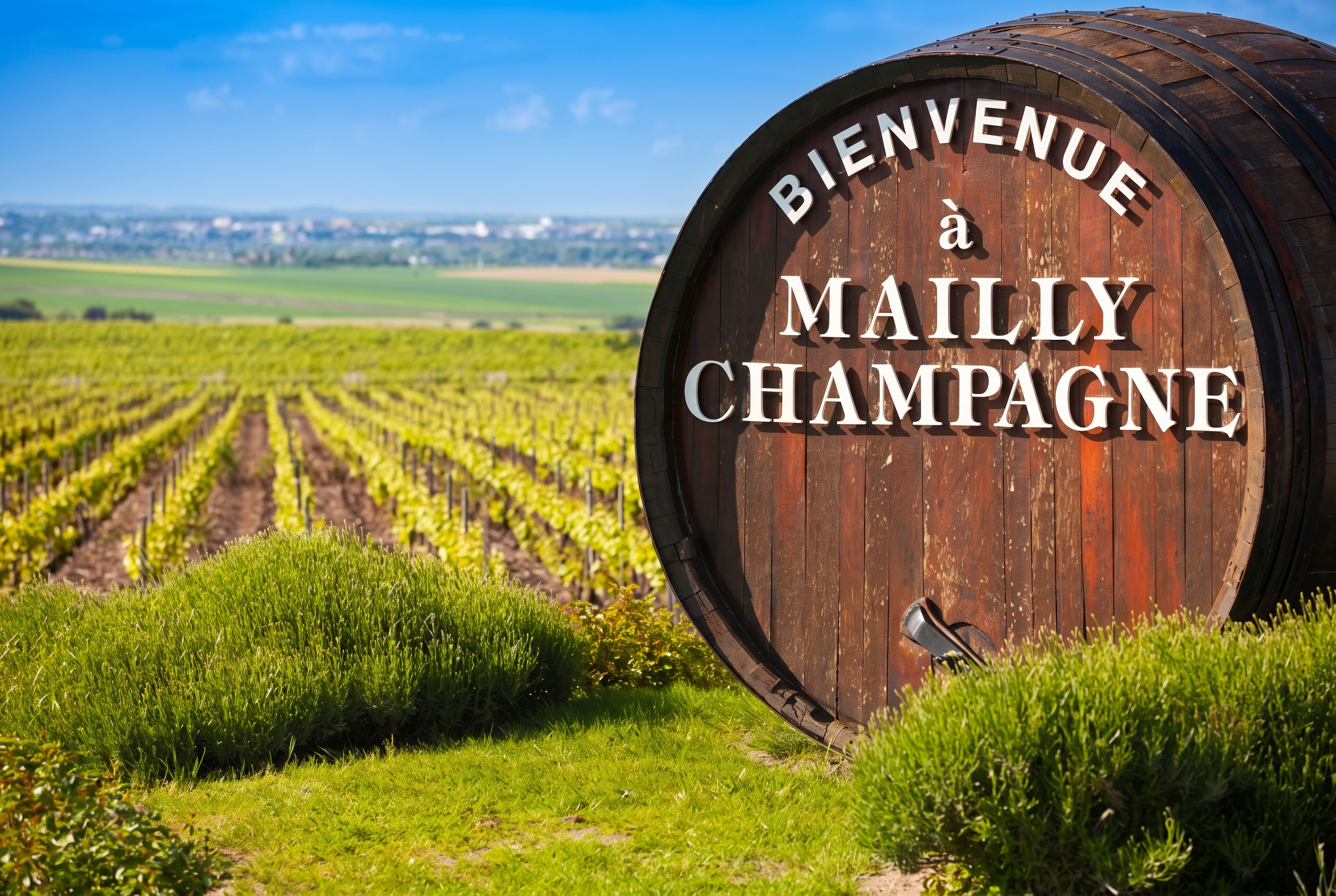
Here you enter the circle of the Grands Crus. Mailly-Champagne is one of the seventeen villages classified at the very top of Champagne's hierarchy, and its name is tied to an institution: the Champagne Mailly Grand Cru cooperative, founded in 1929. Unusually, it produces only from grapes grown on its own Grand Cru terroir — an almost unique case in Champagne. Its tasting space, under a glass roof opening onto the vineyard, lets you sample these cuvées without an appointment (a few euros a glass); for a fuller visit, it is better to book ahead.
But Mailly-Champagne has another, more unexpected distinction: it is one of the rare places where you can literally read the subsoil of Champagne. Starting from the Espace culturel (place du Général de Gaulle), the geological discovery trail runs a loop of about 4.5 km along a former quarry and reveals the layers of chalk, sand and limestone — the legacy of ancient tropical seas — that make this terroir so distinctive; you may even spot fossils. And every two years the park installs contemporary artworks along it (the "Art en forêt" event), some of which stay permanently: a short, instructive and surprising walk.
The village, perched on the slopes, also offers fine views over the Reims plain and is, like its neighbours, reachable by the Grand'R shuttle in season.
Champagne Mailly Grand Cru — the village cooperative is the ideal address for a tasting: 100% Grand Cru cuvées, a space open onto the vineyard, and a walk-in welcome for a few glasses.
Chigny-les-RosesRoses and a fine table
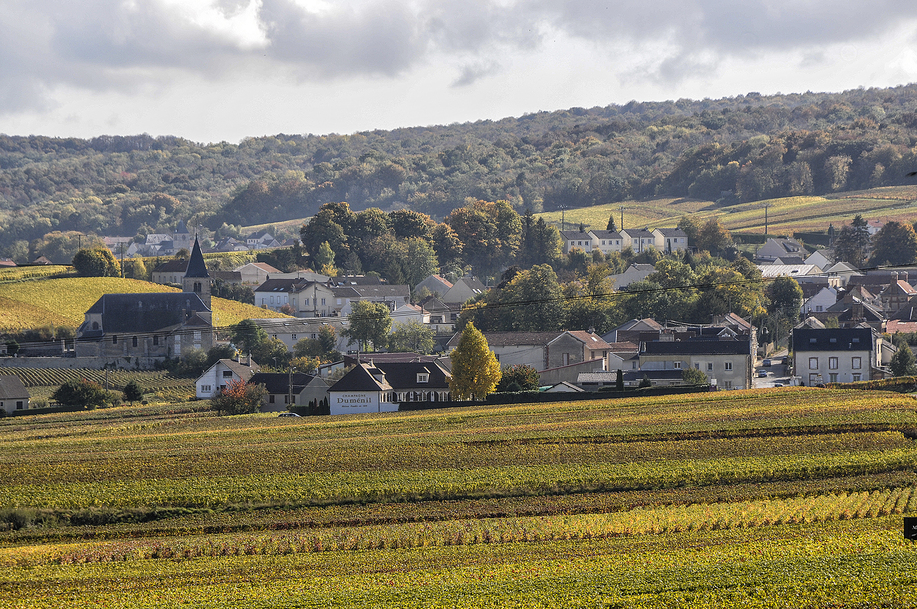
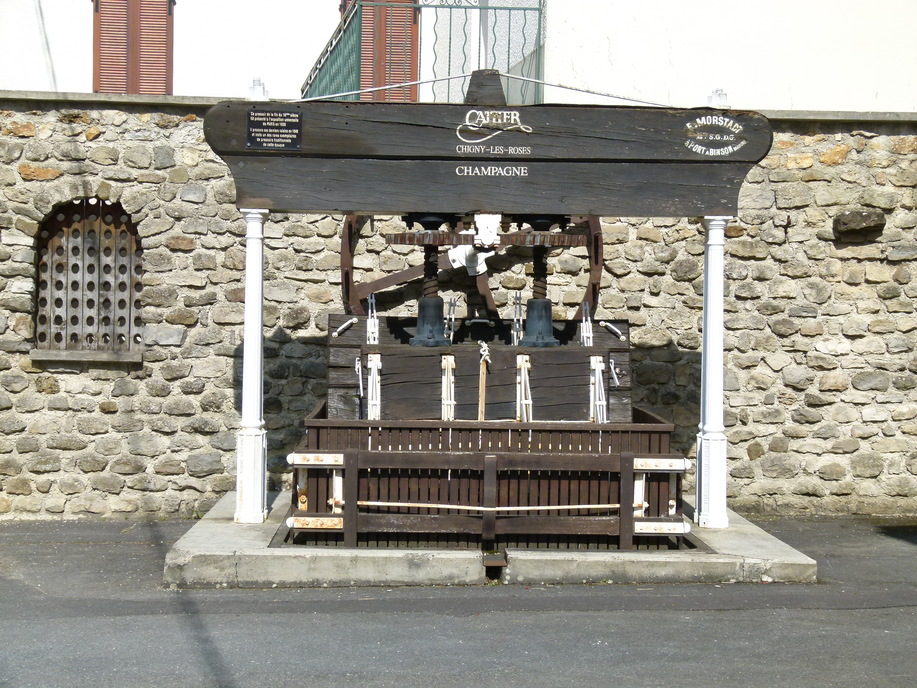
The name says it all: Chigny-les-Roses owes its suffix to a long tradition of growing roses, which once bloomed between the rows of vines and still adorn the village. It is one of the most charming villages on the slopes, a peaceful Premier Cru (the tier just below Grand Cru) where you wander between growers' houses, flower-lined lanes and glimpses of the vineyard. Like its neighbours, it is served by the Grand'R shuttle in season.
People come here to stroll, to stop at a grower-producer for a tasting, or simply to enjoy the quiet and the light on the slopes. The village also makes a lovely waypoint on the Champagne tourist road, halfway between Rilly and the heart of the Grands Crus.
Couvert de Vignes (4 bis place Pommery) — set in a former classroom amid the vines, chef Benjamin Gilles's restaurant serves modern, polished cooking that puts vegetables and seasonal produce first — work recognised with a Michelin "Assiette" (a plate, a step on the Michelin scale). The ideal gastronomic stop, more intimate than a grand starred table. Booking recommended.
Rilly-la-MontagneThe village you can reach by train
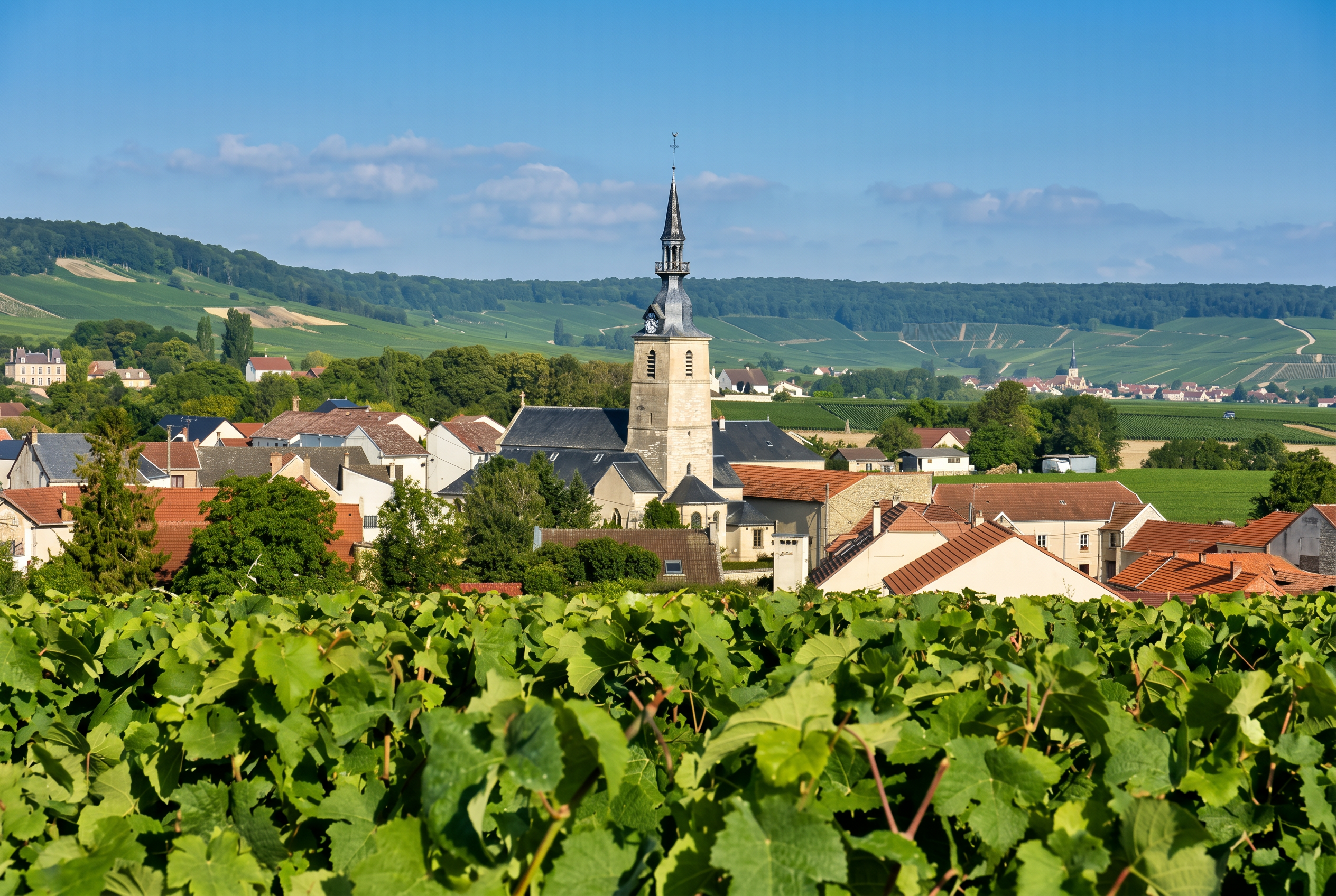
At the foot of the northern slope of the Montagne, Rilly-la-Montagne has an asset few wine villages can claim: you can arrive without a car. The station is served by the regional TER train from Reims in about ten minutes, and the village is also a stop on the Grand'R tourist shuttle in season — making it an ideal starting point for a getaway. The TER line then continues towards Épernay, crossing the massif through a tunnel under the mountain.
It is also a genuine, lively wine village, home to more than 70 growers and some 350 hectares of Premier Cru vineyard. You wander between Champagne-style façades, push open the door of the Saint-Nicolas church — Romanesque (12th century), whose carved wooden stalls depict the work of the vine and of wine — and climb towards the slopes for the view. For nature lovers, the "La Forêt Eau'trement" trail (2.8 km) explores the ponds of the Rilly forest, with panels adapted for visually impaired visitors. The village remains a great base for exploring the surroundings on foot or by bike.
Prise de Mousse (23 rue de Reims) — a Champagne bar and small-plates spot bringing together more than a hundred labels from the Montagne de Reims, paired with sharing boards and plates. Terrace, step-free access and dogs welcome — the perfect place to pause with a glass between two villages.
SacyThe château in the vines
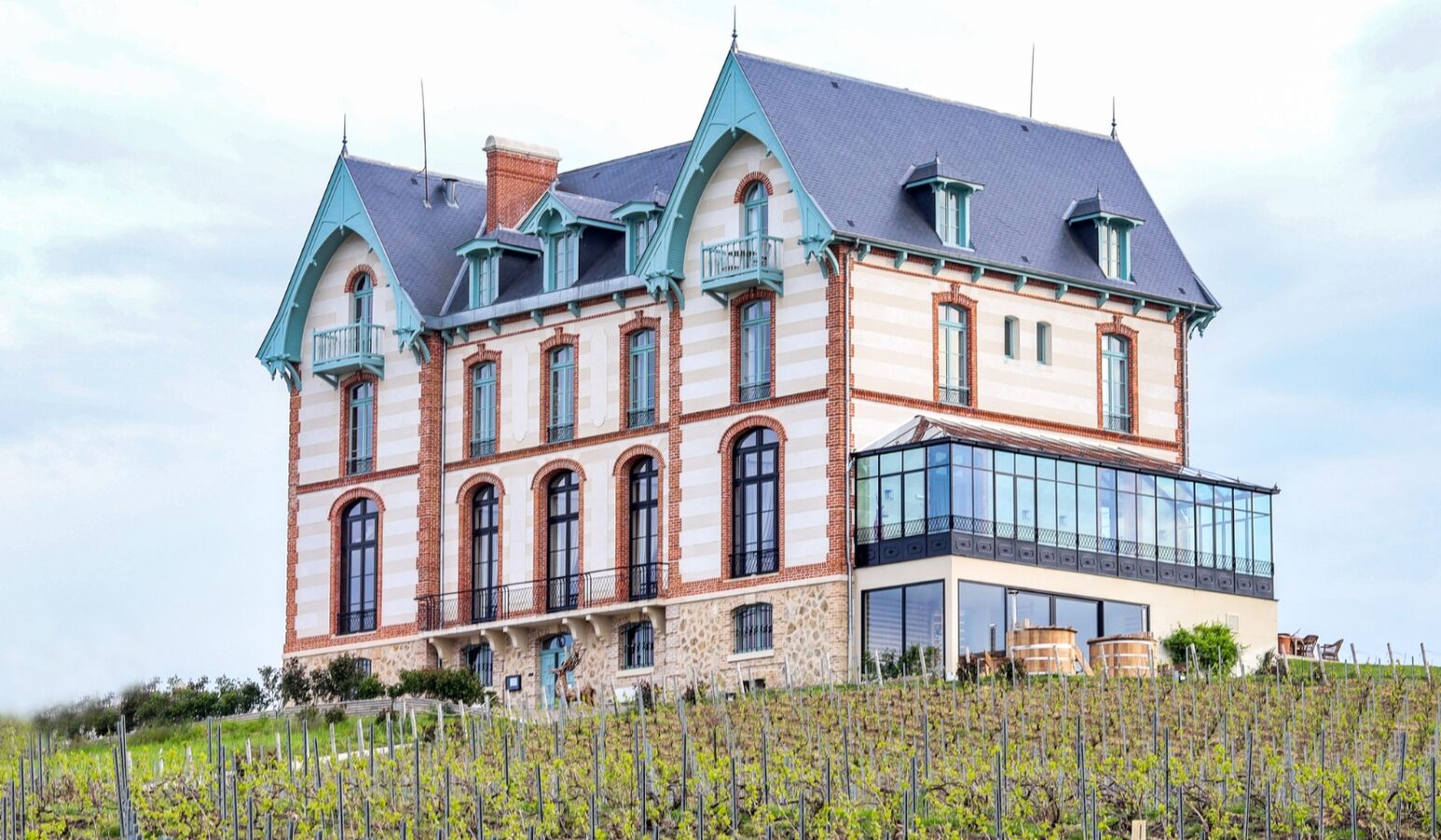
Climbing towards the Montagne, Sacy is one of the first villages you pass — 14 km from Reims — and the first "village" stop on the Grand'R shuttle after the Champagne-Ardenne TGV station. This small wine village of the Champagne appellation is built around its Saint-Rémy church, a fine fortified Romanesque building from the 12th century listed as a historic monument, and already offers pretty glimpses of the vineyard along the Champagne tourist road. Up on the heights, the "point de vue des Sources" makes a pleasant open-air spot looking out over the slopes and the forest.
Above all it is the Château de Sacy that gives the village its reputation. This 19th-century residence, built for a wealthy family of Reims merchants, has had an eventful history — it even served as a dance hall for the American liberators — before standing empty from 1996, then being bought and turned into a hotel (opened in 2017). Today the house plays the discreet-luxury card: a hotel with a spa, a restaurant and a Champagne bar whose panoramic terrace looks out over the sea of vines — one of the loveliest vantage points around for a glass at sunset.
Ville-DommangeThe belvedere over Reims
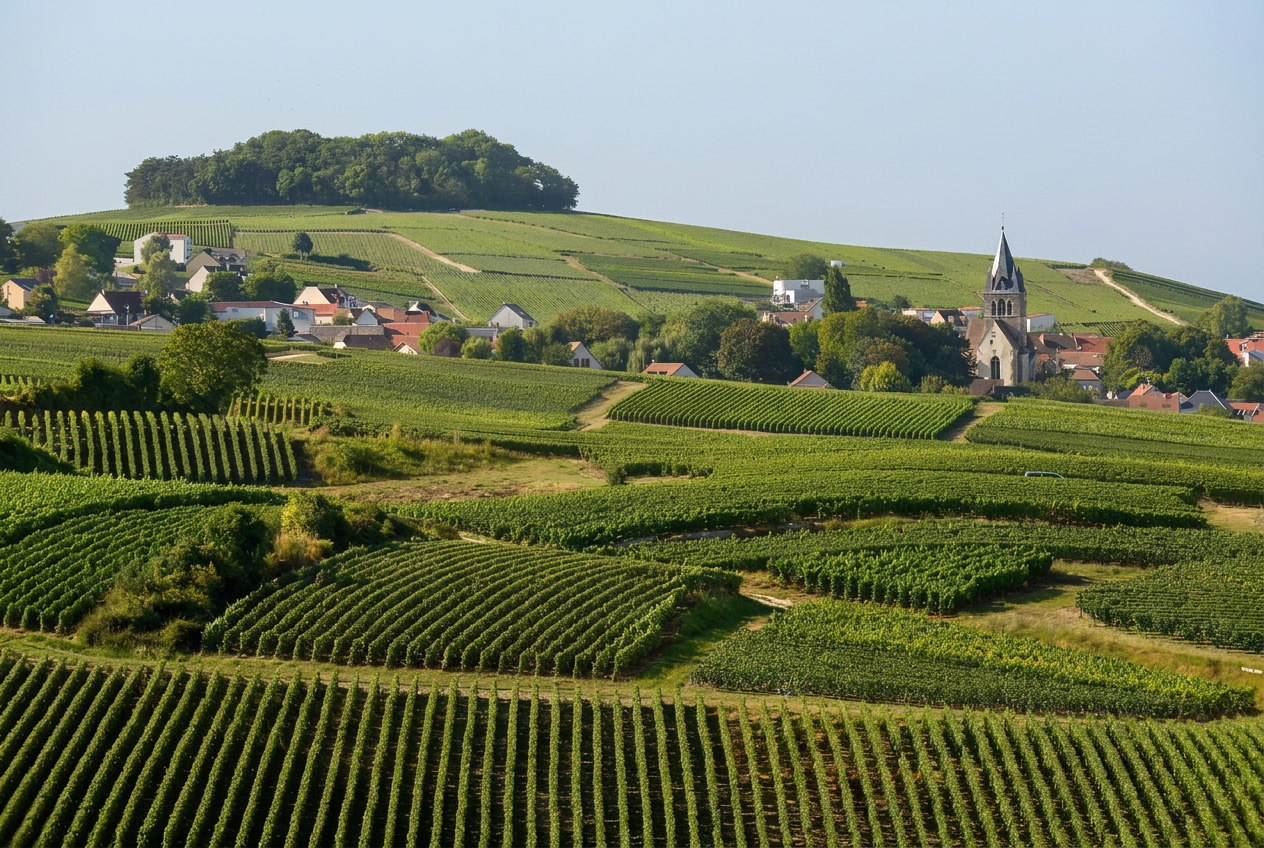
We finish with a detour to the west of the park, about fifteen minutes from Reims — and with one of the finest viewpoints in the whole region. On the heights of Ville-Dommange, standing alone among the vines at the end of the rue des Quatre Vents, the Saint-Lié chapel has watched over the plain for centuries. The building blends parts from the 12th, 13th and 16th centuries and has been listed as a historic monument since 1922. Its commanding position also gave it a strategic role: it served as an observation post during both World Wars, and two blockhouses are still visible beside it.
But what you really come here for is the panorama. From the esplanade around the chapel, the eye travels far: Reims — about 11 km away — with its cathedral, a UNESCO World Heritage site, easy to pick out, but also the Saint-Thierry massif and the vineyard tumbling down to the Champagne plain. It is a perfect spot late in the day, when the light grazes the slopes — and an excellent reference point for grasping the park's geography. Note: this stop is not served by the Grand'R shuttle; you reach it by car.
Walking & nature
Beyond its star sites, the Montagne de Reims is best savoured on foot. The massif is criss-crossed by more than 500 km of waymarked walking trails (plus 90 km of dedicated mountain-bike routes), from a one-hour loop to long-distance hiking — the GR14 long-distance path crosses the park. You walk now under the plateau's high woods, now along the slopes among the vines, with regular openings onto the plain. The Faux trail (at Verzy) and the geological discovery trail (at Mailly-Champagne), both mentioned above, are the two essential walks, but far from the only ones.
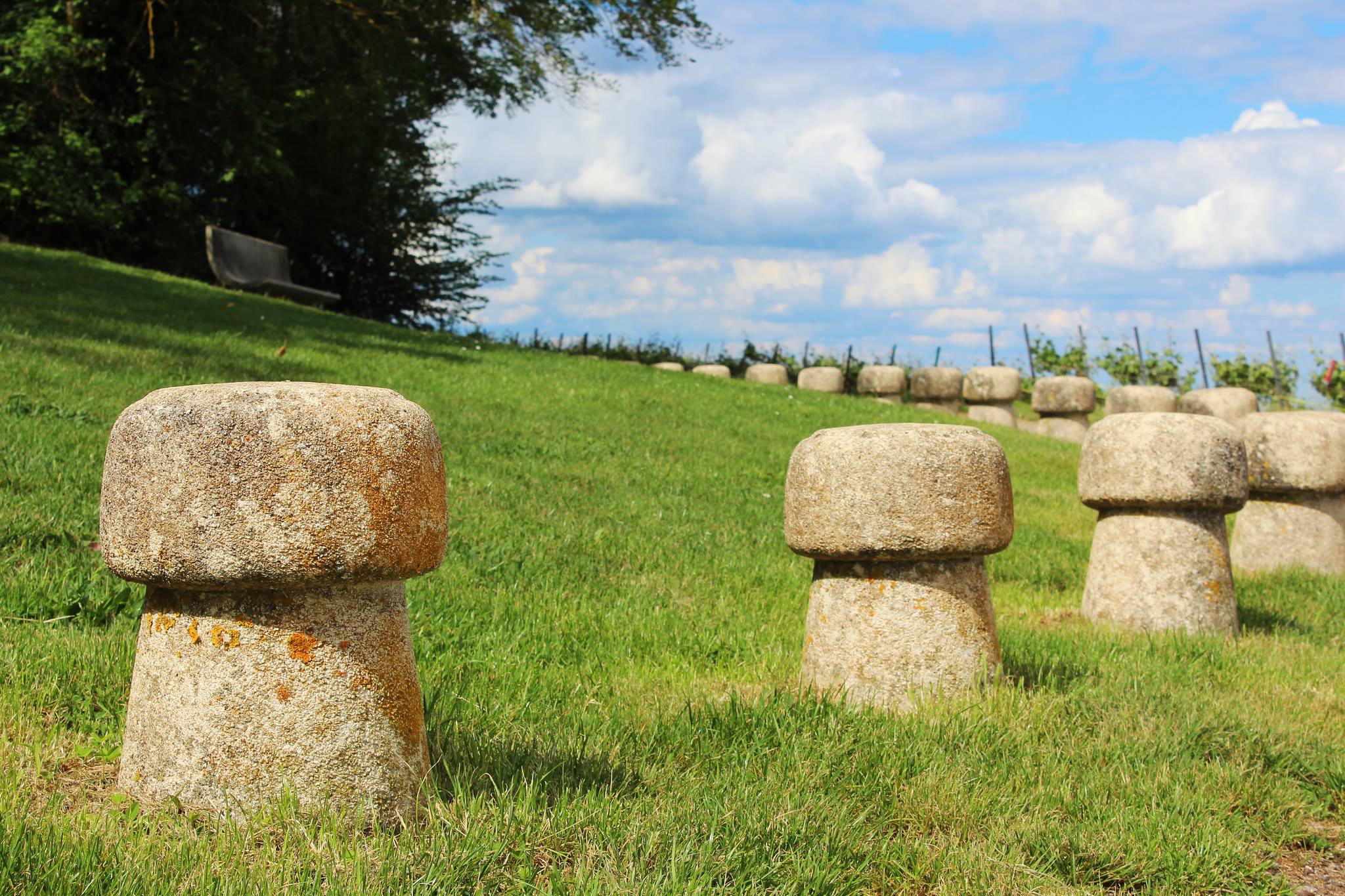
As you go, keep an eye out for the vine lodges (loges de vigne): these little stone huts, former growers' shelters, dot the slopes of the Montagne de Reims. More than a hundred survive today, and many are finding a second life through wine tourism — the park works to restore them. Now one of the area's emblems, they even have their own walk: the Loges de Vigne loop at Trépail (about 5 km), to the east of the massif, for anyone who wants to make them the theme of a hike.
To plan an outing or get to know the area, the Maison du Parc at Pourcy is the place to start: it is the regional park's information centre, surrounded by a conservation orchard and an educational pond. The information point is open on weekdays, Monday to Friday (closed at weekends and on public holidays — worth knowing if you come on a Sunday). You will find maps, route ideas and exhibitions on the wildlife, plants and landscapes.
The Montagne is also well suited to cycling, on the road and on tracks, and you can link the villages by following the Champagne tourist road, which winds from slope to slope between Reims and Épernay. Keen riders will also find waymarked loops, such as the "Autour de Verzy" cycle loop (about 24 km), linking Mailly-Champagne, the Verzenay windmill and lighthouse, then the Verzy forest. One last practical tip: in the forest the mobile signal is patchy — the free "ONF Découvertes" app remains your best ally for not missing the faux and the points of interest.
How to get to the Montagne de Reims
One of the great strengths of the Montagne de Reims is how close it is: you are there in about twenty minutes from the centre of Reims.
By car. This is the most flexible way to explore the massif at your own pace. Allow 20 to 30 minutes to reach the heart of the vineyard from Reims; the Faux de Verzy site is signposted from the D944 (Reims–Châlons-en-Champagne), with the Faux and Pins car parks (which fill up fast at weekends and in high season). But the real pleasure, by car, is to follow the Champagne tourist road, waymarked, winding from village to village along the slopes. It is the ideal route for wandering without a fixed plan: you stop at the "champagne" signs outside the houses, push open the door of a little-known grower, and pass through charming, typical villages you would never have thought to look for. Often it is these unplanned stops, far from the big houses, that leave the best memories — and let you head home with a few bottles bought straight from the producer.
By train. The regional TER line known as "la Ligne des Bulles" (the Line of Bubbles) crosses the massif between Reims and Épernay and stops notably at Rilly-la-Montagne (about ten minutes from Reims) and Germaine, in the heart of the park. It should not be confused with the Grand'R shuttle, which runs by road: the two are complementary car-free options. An ideal choice, to round off on foot or by bike.
The Grand'R tourist shuttle. This is the clever option still few people know about. In season, this shuttle links the Champagne-Ardenne TGV station (at Bezannes) to the Faux de Verzy terminus, serving around fifteen villages in the heart of the massif — including most of the stops in this guide (Sacy, Rilly-la-Montagne, Chigny-les-Roses, Mailly-Champagne, Verzenay, Verzy). The vehicle is fitted with a rack for up to 4 bikes, so you can ride up by shuttle and freewheel back down through the vineyard — a welcome exception, since non-folding bikes are not normally allowed on the network's buses. It runs at weekends and on public holidays in spring, daily in summer, then on-demand (via the MyMobi app) in the late season; it is included with Grand Reims Mobilités tickets. Dates and times change each year: check the current year on the Grand Reims Mobilités website. Note: the shuttle is not adapted for travellers with reduced mobility.
By bike. For the more sporty, the Montagne can also be climbed under your own steam, with fine ascents rewarded by the panoramas and the option to combine with the TER train or the shuttle.
- Suggested time: a full day for the essentials, a half-day for a focused visit (the Faux plus one village).
- Best season: May to October; autumn brings superb colours in the forest.
- Parking: the Faux and Pins car parks at Verzy (arrive early at weekends).
- Car-free: TER "Ligne des Bulles" (Rilly-la-Montagne, Germaine) + Grand'R shuttle in season.
- Accessibility: the Faux trail is suitable for everyone; the Grand'R shuttle is not adapted for reduced mobility.
FAQ — Montagne de Reims
How long should I set aside to visit the Montagne de Reims?
A full day is enough for the essentials: the Faux de Verzy, the Verzenay lighthouse and one or two villages with a tasting. If you are short on time, a well-focused half-day (say the Faux and Verzenay) is still very rewarding. To take your time hiking and string together several villages, allow two days.
Can you visit the Montagne de Reims without a car?
Yes. The TER train links Reims to Rilly-la-Montagne in about ten minutes (with a stop at Germaine too), and the Grand'R tourist shuttle serves around fifteen villages in the heart of the massif in season, from the Champagne-Ardenne TGV station up to the Faux de Verzy. The shuttle even has a bike rack so you can combine the two.
What are the must-see sites?
The Faux de Verzy (the forest of twisted beeches, unique in the world for its density), the Verzenay lighthouse and its Vine Museum, the Mont Sinaï observatory (the highest point of the park) and the Saint-Lié chapel at Ville-Dommange, for its panorama over Reims and its cathedral.
Where can you eat and drink in the Montagne de Reims?
Every village has its good address. For a gastronomic table, Le Grand Cerf at Montchenot (Michelin-starred) or Couvert de Vignes at Chigny-les-Roses (Michelin "Assiette"). For something more relaxed, La Grappe à Pizza at Verzenay (the pizzaiolo is a world champion) or, for a glass, the Prise de Mousse Champagne bar at Rilly-la-Montagne, the Perching Bar up in the trees at Verzy, and the Mailly Grand Cru cooperative for a tasting. Not to mention the many growers who welcome visitors in every village.
When is the best time to see the Faux de Verzy?
The site can be visited year-round and each season has its charm: the bare silhouettes of the faux in winter, the cool of the woods in summer, and above all the blazing colours of autumn. Avoid the middle of the day at weekends in high season, when the car parks are full — come early in the morning.
Is the visit free?
Largely, yes: the Faux de Verzy, the Mont Sinaï, the Saint-Lié chapel and wandering the villages cost nothing. The Verzenay lighthouse and its museum, however, are paid (from €3), as are tastings at the growers'.
In short: a getaway within reach of Reims
The Montagne de Reims is a whole world a few kilometres from the city: a one-of-a-kind forest, panoramas that sweep across the plain, Grand Cru villages and addresses worth the trip, from a bar perched in the trees to a starred table. You can spend a morning here or devote a whole weekend to it, by car, by train or by shuttle.
The easiest way to make the most of it is to treat it as a day trip from Reims: set off in the morning, explore the vineyard at your own pace, and come back in the evening to a city with no shortage of places to dine and sleep. That is the real appeal of making Reims your base — the cathedral, the great Champagne houses and the dining on one side, the nature escape of the Montagne on the other.
Read more on Bonjour Reims: