

13 things to know
about Reims
France's 13th city — and one of its most rewarding to visit.
France's 13th city, 45 minutes from Paris
Reims has 177,000 inhabitants, making it officially the 13th most populous commune in France according to the latest INSEE census. And yet it remains remarkably accessible and refreshingly human in scale: from Paris-Est station, a TGV deposits you here in just 45 minutes. Wide boulevards, lively terraces, serious gastronomy and a rich cultural life — it has everything, without the crowds or the prices of the capital. Some call it the little Paris of the East. Not entirely wrong.
34 kings of France were crowned here
Not 2, not 5 — 34 kings. From Clovis, baptised in Reims at the end of the 5th century, to Charles X in 1825, the city was for over a millennium the stage on which French sovereigns were crowned. It was here, according to legend, that a dove brought Saint Remigius the holy oil to anoint Clovis, making Reims the city chosen by God to crown its kings. A mystical origin that has echoed through the centuries, giving the city a historical gravity that few places on earth can match.
The cathedral: 2,303 sculptures and Chagall stained glass
Notre-Dame Cathedral of Reims is one of the most accomplished Gothic works in Europe. Begun in 1211, its façade is a book in stone, with a staggering 2,303 sculptures. Inside, light filtered through the stained-glass windows creates an atmosphere outside of time. Among them, one extraordinary surprise: the windows by Marc Chagall, installed in 1974, weaving cerulean blue and biblical narratives into the medieval architecture in a breathtaking dialogue across the centuries. The whole ensemble is UNESCO listed — and every bit deserves it. To explore Reims's architectural heritage beyond the cathedral, see our Art Deco trail guide.
The Museum of the Coronations
The former Palais du Tau, the royal residence during coronation ceremonies, is undergoing a complete transformation. It will reopen in winter 2026/2027 under a new name: the Museum of the Coronations. Entirely redesigned and reimagined, it will offer an unprecedented immersive experience — room by room, visitors will progress as though through a coronation ceremony itself. The centrepiece? A procession display case stretching several dozen metres, housing the royal treasures including the spectacular coronation mantle of Charles X, unseen for years. The scenography has been entrusted to Thomas Jolly, the stage director who created the opening ceremony of the Paris 2024 Olympic Games.
Art Deco, everywhere — and nowhere else quite like this
Reims is one of the most representative Art Deco cities in France — and by far the most coherent in terms of its urban ensemble. Almost two-thirds of its buildings had been destroyed during the First World War, forcing the city to reinvent itself from scratch. Reims was thus entirely rebuilt in the 1920s and 1930s: pure geometry, elegant ironwork, ornamental façades. The Carnegie Library, the Boulingrin Market Hall, the Opera House with its lavish interiors, the Cours Langlet… In 2025, the city celebrated the centenary of its Art Deco heritage: the Carnegie Library's peristyle had won the gold medal at the International Exhibition of Decorative Arts in Paris in 1925 — the very exhibition that gave the movement its name. In other words, Reims was in the room the day Art Deco became Art Deco. Our Art Deco trail guide takes you from building to building.
250 km of cellars beneath your feet
Beneath the pavements of Reims, an underground world stretches for 250 km of galleries hewn from the chalk, some of them dating back to the Gallo-Roman era. It is here that the great Champagne houses — Veuve Clicquot, Taittinger, Ruinart, Mumm, Pommery — age their cuvées in monastic cool and silence. These chalk cellars have been UNESCO listed since 2015. To visit them is to descend into the heart of French wine history, far removed from the festive clichés. To go further, discover Hautvillers, the birthplace of Champagne, just 20 minutes from Reims.
Champagne: an entire civilisation
Just three grape varieties — Chardonnay, Pinot Noir, Pinot Meunier — and a vocabulary entirely its own: riddling, disgorgement, dosage, blending. Champagne has its rituals, its family dynasties, its cellar masters who hold the status of great artists. But beyond the craft, Champagne is above all an art of living: taking the time, celebrating the everyday as much as the grand occasion. The great Reims houses — some founded in the 18th century — embody this philosophy better than anyone, with their archives, their art collections, their traditions passed down unchanged from generation to generation. To visit a Champagne house in Reims is not simply to taste: it is to understand why an entire region chose to make excellence and shared pleasure its reason for being.
A future Museum of Fine Arts on an extraordinary scale
The Museum of Fine Arts has been closed since 2019 for a monumental renovation: €54 million, entrusted to Portuguese architects Aires Mateus, to triple the exhibition spaces (from 1,200 to 3,800 m²) within the former Abbey of Saint-Denis. Reopening is expected in 2027. On the programme: an entire room dedicated to Foujita, an Impressionist collection (Monet, Renoir, Sisley, Pissarro), Art Deco decorative arts, and an unobstructed view of the cathedral. Within a few months, Reims will have one of the most modern fine arts museums in France.
Gastronomy: between bubbles and sweetness
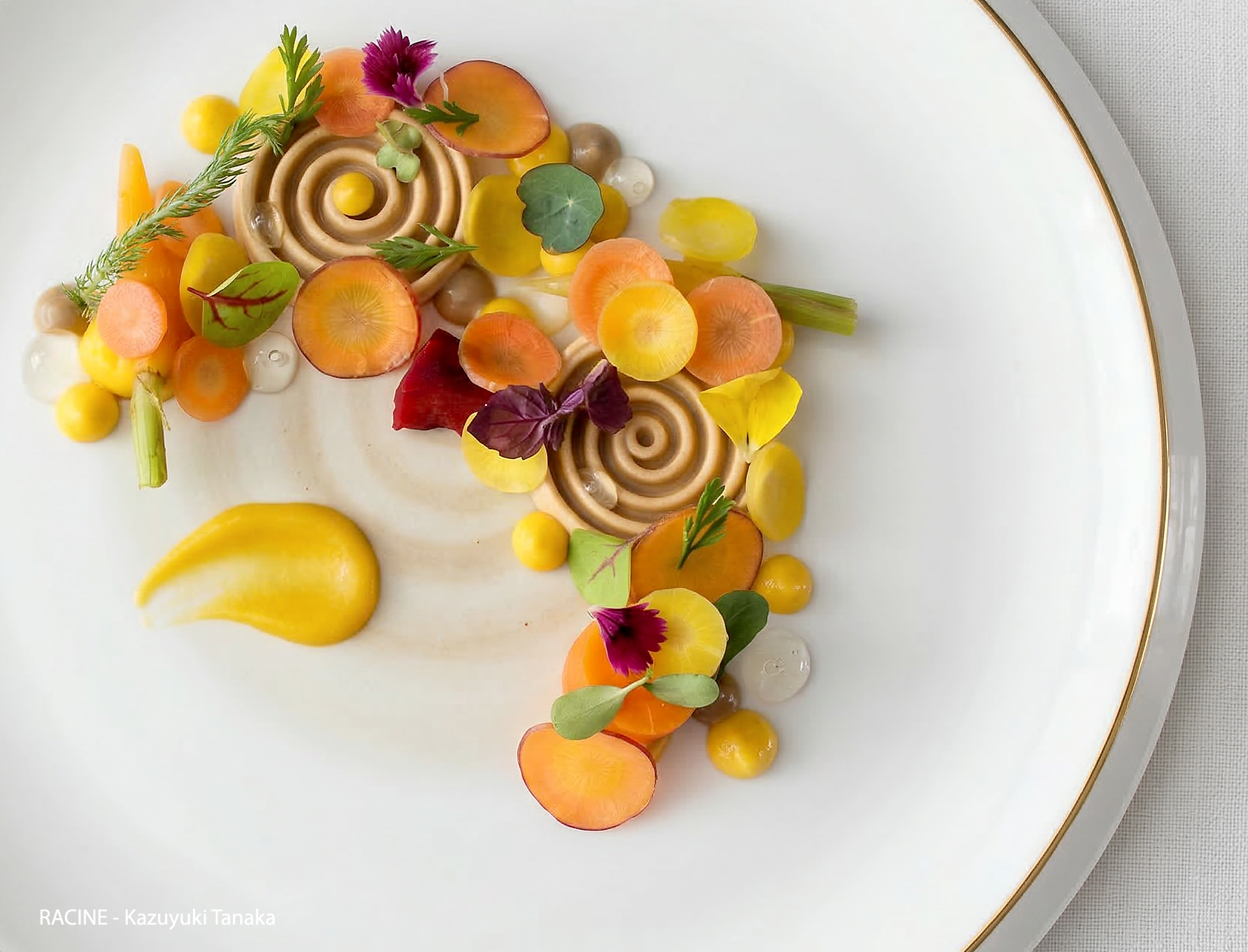
The Reims food scene has no shortage of appeal. Its Michelin-starred tables sit alongside modern bistros very much on the rise. On the sweet side, Reims pink biscuits are unmissable — those crisp little biscuits traditionally dipped in a flute of Champagne have been made in Reims since the 17th century. And for the aperitif, ratafia de Champagne, made from grape must and eau-de-vie, remains the region's best-kept secret. A souvenir basket of these specialities is the finest way to take Reims home with you.
A city that carries the memory of both World Wars
Few cities in France bear the scars of both world conflicts with such intensity as Reims. During the First World War, it was bombarded for over 1,000 days, the cathedral itself in flames, entire neighbourhoods erased from the map. Thirty years later, it was here that the act of Nazi Germany's surrender was signed on 8 May 1945, in the Surrender Room, preserved intact with its military maps still on the walls. Add to this the proximity of the Fort de la Pompelle, the Chemin des Dames and the battlefields of the Marne: Reims is a natural starting point for anyone who wishes to understand, beyond the history books, what Europe lived through in the 20th century.
A city that lives — not just a backdrop
With 30,000 students, Reims has an energy and a youthfulness you feel the moment you walk its streets. The Place Drouet-d'Erlon with its terraces, the weekend producers' markets, the natural wine bars springing up in the backstreets: the city has developed a genuine culture of good living that weaves naturally into a visit. You don't simply move from one monument to the next — you settle in, eat well, drink better, and leave with the feeling of having truly inhabited somewhere, even just for a weekend.
The ideal base for the Champagne wine route
Beyond the city, the Montagne de Reims and the Côte des Blancs unfurl their vines just a few kilometres from the centre. Villages like Épernay, Hautvillers (where Dom Pérignon is buried) and Aÿ are reachable by car in 20 to 30 minutes. In autumn, the colours of the hillside vineyards are simply spectacular. These wine-growing landscapes are UNESCO World Heritage listed — the third such site in the Reims region.
Triple UNESCO: an exceptional concentration of heritage
Reims belongs to the very small circle of cities in the world that can claim three UNESCO World Heritage Sites: Notre-Dame Cathedral, the Palais du Tau, and the Champagne cellars and houses. For a city of 177,000 inhabitants, this concentration is genuinely extraordinary — most major world cities can claim just one, if any. This triple listing is not merely a marketing argument: it says something profound about what Reims truly is, a city where every layer of history — religious, royal, viticultural — has left a mark of universally recognised value. After that, it is rather hard to find a good reason not to go.
A quick weekend, a longer stay, or an escape through the seasons: whatever the length of your visit, Reims will always have more to offer than you expected. Our advice? Plan generously — you won't regret it.
And because 13 is unlucky…
We're not tempting fate. Here's a 14th fact, just to be safe.
🏎️ Reims invented the podium champagne spray
The Reims-Gueux circuit, laid out on open public roads on the outskirts of the city, hosted the French Formula 1 Grand Prix from 1950 to 1966 — Fangio, Hawthorn and Ascari raced here at full speed. It was here, in 1950, that Moët & Chandon first offered a bottle of Champagne to the race winner, launching a tradition that billions of television viewers now know by heart. The circuit is now abandoned, listed as a historical monument and open to visitors — a ghost track where it all began.
There. We're at 14. You can travel with peace of mind.